A waterproof blanket is a cosy throw with a hidden barrier that stops liquid from soaking through to your mattress, sofa or floor. Most modern designs use three layers: a soft fabric top, a waterproof membrane in the middle, and a backing fabric for comfort and grip.
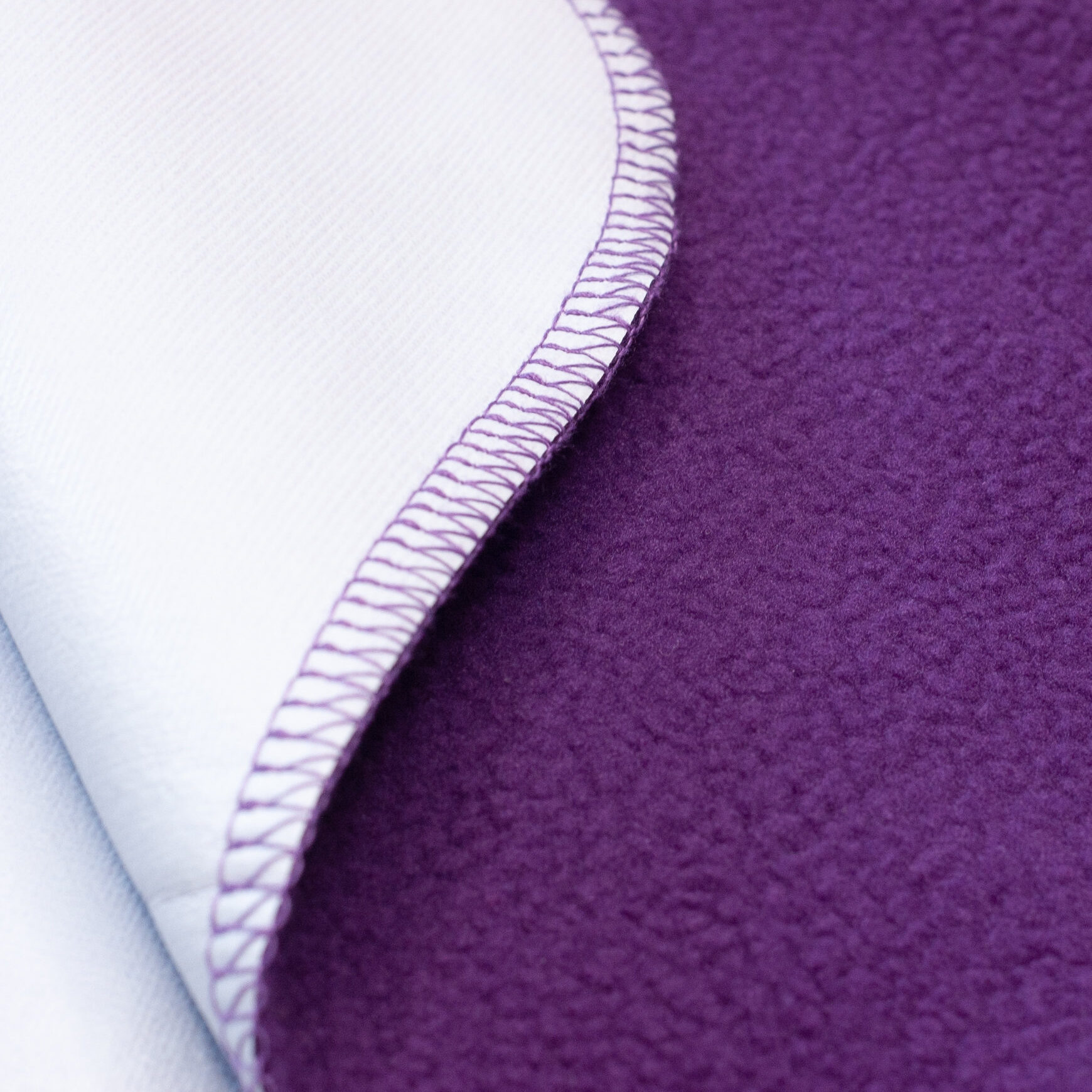
The key to every waterproof blanket is the waterproof barrier layer, seen on the left/underside.
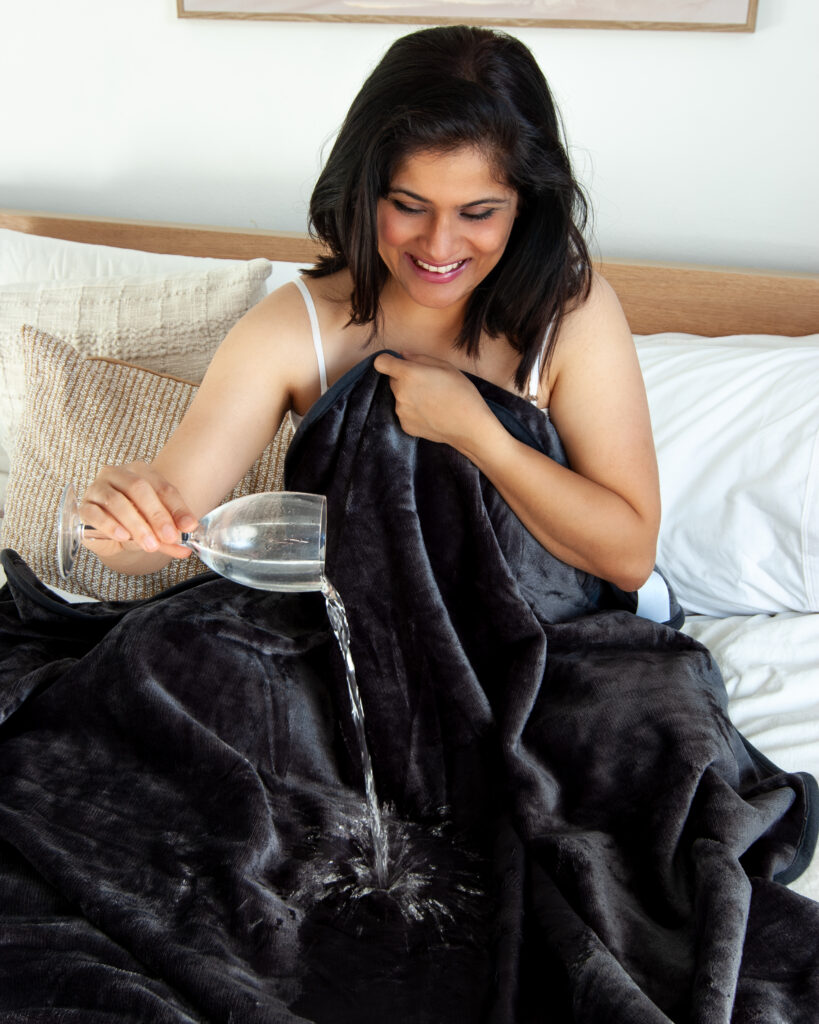
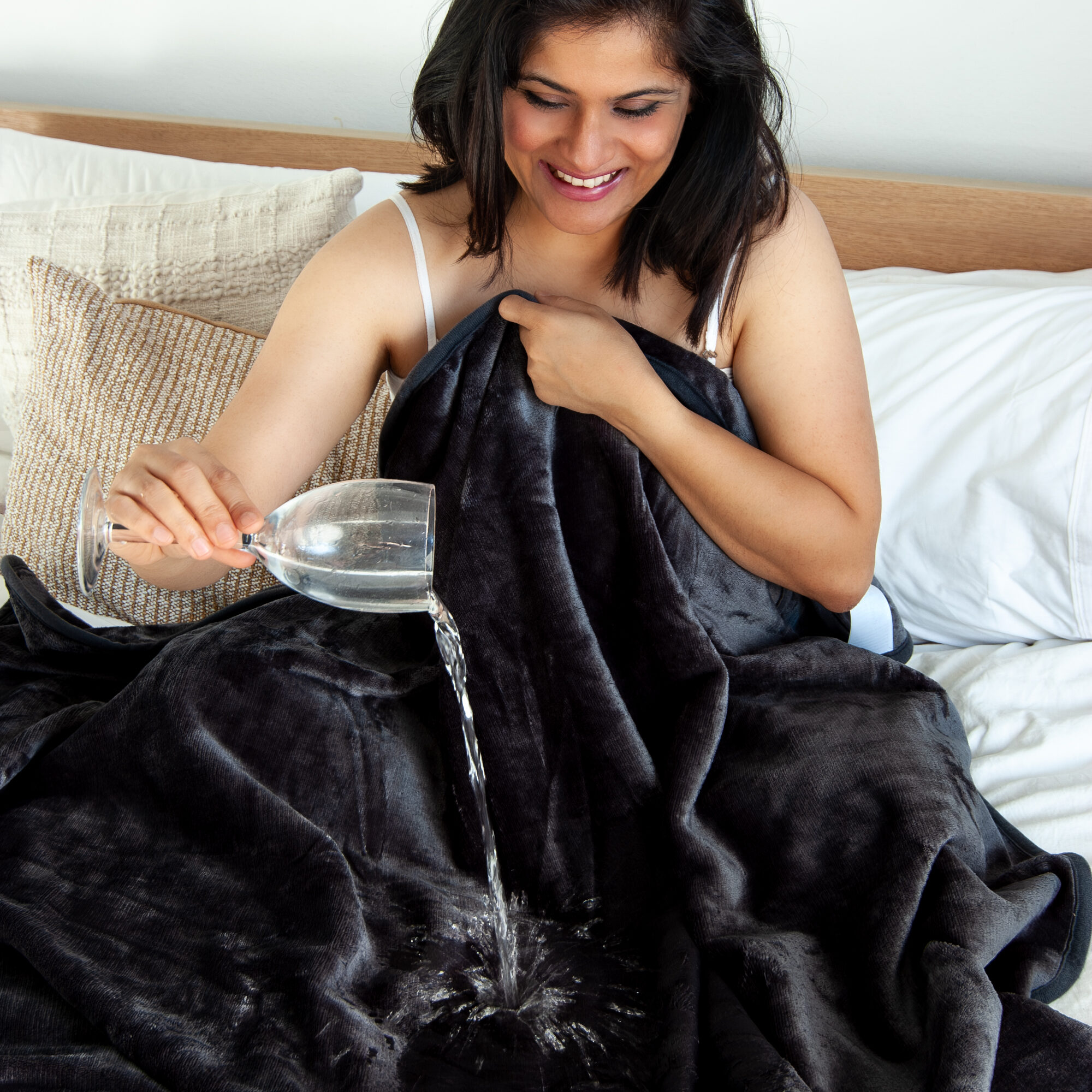
Relax with Banana Passion waterproof blankets, which can absorb a lot of liquid and keep your bed dry.
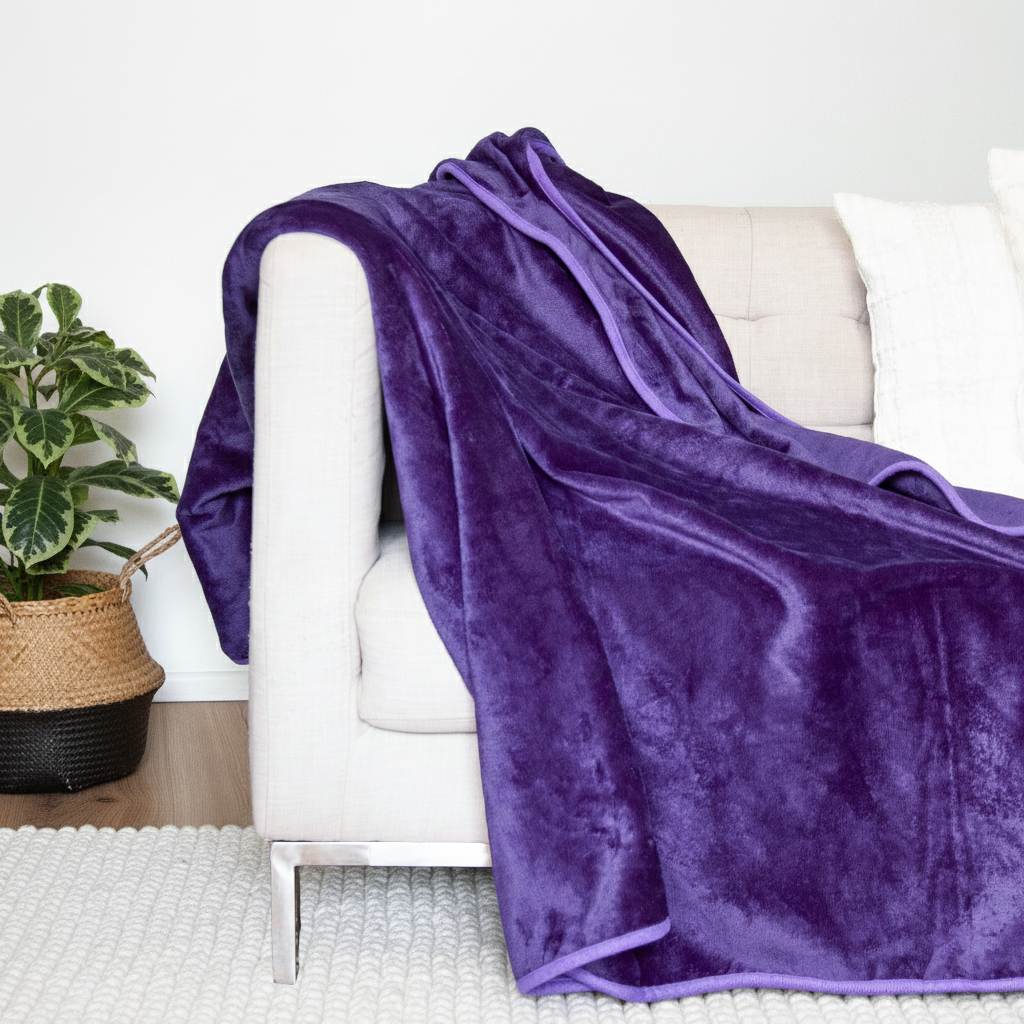
Waterproof blanket ready to go on the couch, for use as a throw, or for carefree cuddles, spills, and everything in between.
How do waterproof blankets work?
At the centre is a thin TPU (thermoplastic polyurethane) membrane that blocks liquid from passing through, even under body weight. Soft fabric layers sit above and below this membrane so you feel like you are on a normal blanket, not a plastic tarp.
What are waterproof blankets used for?
Waterproof blankets are surprisingly versatile once you have one in the house.
Intimacy and couples time: Protect your bed during sex, squirting, period sex or oil massages, then toss the blanket in the wash instead of stripping off the bedsheets.
Everyday bed protection: Catch night sweats, period leaks, nausea and kids’ accidents without relying on a crinkly mattress protector.
Pets and kids: Use on the couch, in the car or on the floor to handle muddy paws, toilet training and snack disasters.
Outdoor and travel: Take it to the beach, park or camping as a dry, comfy base on damp grass or sand.
Care and recovery: Offer dignified protection for people managing incontinence, heavy periods or post‑partum bleeding.
A single large waterproof blanket often replaces a stack of towels, flat sheets and old throws that never quite do the job as well.
When they’re made properly, yes, waterproof blankets absolutely work. A quality blanket will hold a surprising amount of liquid without letting it reach the mattress or sofa below, even if it pools for a while before you wash it.
What makes the difference is:
A continuous waterproof layer (usually TPU) with no gaps or pinholes.
Sealed seams or tight stitching so liquid can’t creep out at the edges.
Absorbent outer layers, so spills spread and soak into the fabric instead of running straight off the sides.
Cheaper “water‑resistant” throws often use a surface spray that repels light splashes but gives up quickly under pressure or volume. If you’re dealing with serious liquids—think lube, squirting, period blood, kids’ accidents or pets—you want a true waterproof membrane rather than just a coating on the top.
Waterproof vs water‑resistant blankets vs dropsheets
Not all “protective” blankets are created equal, and the jargon can get confusing. Here is how these types of blankets differ:
Water‑resistant blanket: Handles light rain or damp grass, but may leak if you spill a drink or put weight on a wet patch.
Waterproof blanket: Uses a dedicated membrane that blocks liquid under normal use, even when you sit, roll or sleep on it.
Dropsheets: Typically made of plastic, these are excellent at preventing liquid from passing through, but they feel and sound like a plastic tarp.
If you want something soft for intimacy or daily life, a fabric‑and‑membrane waterproof blanket is the sweet spot between comfort and protection.
A short video explaining the differences between waterproof and water-resistant blankets.
What are waterproof blankets made of?
Most waterproof blankets use polyester fleece or microfibre because it is soft, absorbent and less crinkly than plastic. Some options use cotton or bamboo blends, which can feel noisier or heavier.
Outer layers
The top and bottom fabrics give the blanket its personality: how it feels, looks and drapes.
Common choices include:
Velvety or velour microfibre for a plush, hotel‑like feel that’s great for winter and intimacy.
Fleece or flannel for cosy warmth and quick drying, popular in outdoor and camping blankets.
Smooth polyester or cotton blends where a thinner, lighter blanket is the priority.
Some blankets add a textured backing or silicone dots so the blanket grips your sheets and doesn’t slide around during use.
The waterproof membrane
The real hero is the inner waterproof layer.
TPU (thermoplastic polyurethane) is the most popular choice in modern waterproof blankets because it’s flexible, durable and less crinkly than old‑school PVC.
This film is bonded or laminated to the fabric, so it becomes part of the blanket rather than a loose plastic sheet.
The membrane is thin enough that you don’t feel it, but its structure blocks liquid from passing through.
A well‑constructed waterproof blanket can easily last for over a year of regular use if you treat it kindly in the wash. Durable membranes such as TPU are designed to handle repeated flexing and washing without cracking or peeling the way that older coatings sometimes did.
Several factors influence lifespan:
Washing habits: Very hot washes, strong bleach or fabric softener can damage the membrane over time.
Heat exposure: High‑heat tumble drying or ironing may warp or weaken the waterproof layer.
Physical stress: Regular rough handling or snagging on sharp bed frames can create small punctures.
If you follow the care label, most quality blankets stay reliably waterproof for many use cycles before you see any change in performance.
How to wash and dry a waterproof blanket
The good news: you don’t need special products or rituals. Just follow these steps:
Shake off excess liquid and crumbs.
Wash on a regular cycle in cold or warm water with a simple liquid detergent.
Avoid bleach and fabric softener, which can harm or coat the membrane.
Tumble dry on low or line dry; skip high heat.
Store only when completely dry to prevent musty smells.
Couples and beds: Look for queen or king‑sized blankets that fully cover your mattress and give you a generous spill zone. This corresponds to our XL and XXL sizes.
Sofa and car: A throw or large single is easier to fold and drape over cushions or back seats. We recommend L or XL in our size range.
Travel and outdoor: Lightweight, packable designs work best for beach trips, camping and picnics. We offer a medium that packs very small, although for use with multiple people at the same time, our L and XL options suit best.
Choosing a slightly larger blanket than you think you’d need usually pays off—especially for intimacy and family life, where movement is part of the fun.
2. Think about feel and thickness
If you want something you’re happy to leave on the bed or sofa all year round, fabric feel really matters.
Go for velvety or fleece for a plush, cocooning experience on cooler nights.
Pick thinner, smoother fabrics when you live in a warm climate or prefer a barely‑there layer.
A blanket that feels like a “normal” throw is more likely to be used every day instead of stuffed in a cupboard. You can keep it out in plain sight!
3. Check the details
Small design decisions make a big difference to real‑world use.
Double‑sided absorbency lets you throw the blanket down without worrying which way is up.
Strong, bound edges stop wicking and help the blanket keep its shape over time.
Machine‑washable construction saves hours of laundry and makes the blanket genuinely low‑maintenance.
If you’re shopping online, product descriptions that explain the layers (for example, “velvety top and bottom with a TPU waterproof inner”) are a good sign you’re looking at a thoughtfully designed blanket.
Everyday examples: when a waterproof blanket saves the day
It’s often only after buying one that people realise how many moments a waterproof blanket quietly improves:
You and your partner want to use more lube or explore squirting without changing the whole bed afterwards. Instead, lay a waterproof blanket down, enjoy yourselves, then slip it into the wash.
Your toddler has moved out of nappies but still has the occasional night‑time accident; a waterproof blanket over the fitted sheet handles the mess while they keep the same cosy bedding.
Friends pop over after the beach and pile onto the couch in wet swimmers; you throw your blanket over the cushions and let everyone relax.
The dog comes in from a rainy walk and flops straight onto your bed; instead of panicking, you’re grateful for the protective layer you laid down earlier. And yes, my cute kitty loves to sleep on it.
Once you get used to that freedom, it’s hard to go back to worrying about every drop.
When a waterproof blanket might not be enough
There are a few situations where a waterproof blanket should be part of a bigger protection plan.
Ongoing heavy incontinence or medical needs may call for both a waterproof mattress protector and a blanket on top.
Very sharp bed frames, pet claws or metal edges can eventually puncture the membrane if you’re not careful.
Open flames, hot tools or extreme heat are never a good idea near synthetic fabrics or waterproof membranes.
For most households, though, a good waterproof blanket becomes a quiet, comforting background player that makes life, intimacy and family chaos feel a lot more manageable.
Bringing it all together
A goodwaterproof blanket offers peace of mind. If you choose a design with a high-quality TPU membrane, strong seams and a look and feel that you love, it will quietly protect your bed, sofa and moments together for years.